Top 5 Reasons Aluminium Boats for Sale Are Dominating the Market
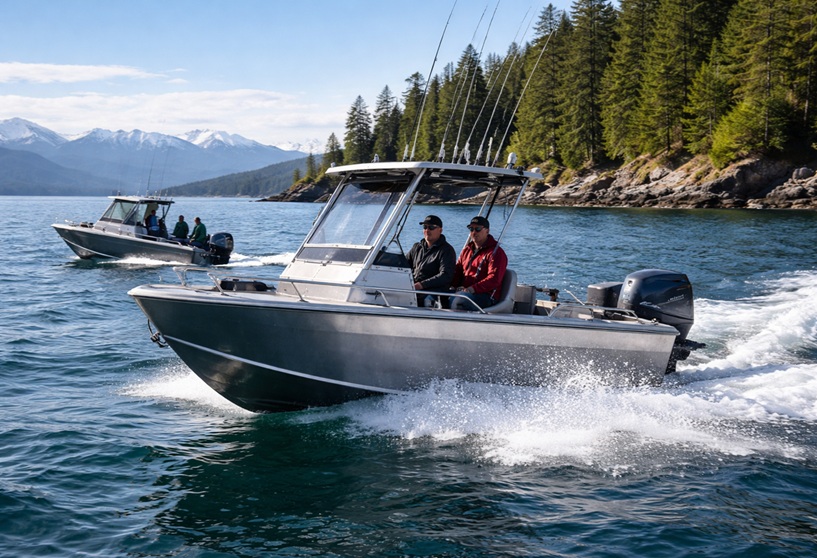
If you’ve spent any time at an Australian boat ramp lately, you’ve likely noticed a shifting tide. Where the gleaming white curves of fibreglass once dominated the horizon, we’re now seeing a “silver tide” of high-performance plate aluminium vessels.
It’s not just a change in aesthetic; it’s a fundamental shift in how boaters view performance and longevity. As we move through 2026, the demand for aluminium boats for sale has surged, with anglers and families alike trading in traditional hulls for the rugged reliability of alloy.
But what exactly is driving this dominance? It’s a combination of aerospace-grade materials, clever engineering that fixes the “pounding ride” myths of old, and a purely pragmatic approach to the Aussie coastline.
Here are the top reasons why aluminium is currently winning the battle for the blue water.
- The Plate Revolution: Strength That Endures
The first cause of the dominance of aluminium is the shift from pressed to plate. Although the old-school tinnies were manufactured using thin sheets pressed into shape, contemporary performance boats are manufactured with the heavy-duty and marine-grade 5083 plate aluminium.
These are not any boats but engineered boats. A high-quality plate hull has a completely welded sub-floor frame, a skeleton that makes the boat extraordinarily rigid. When you are 50km off the coast, and the weather goes bad, it is that rigidity that causes the hull not to bend and gives you the confidence to press on.
- Designing the “Deep-V Secret” (The Soft Ride)
The long-standing criticism of aluminium boats was that they were loud and teeth-shattering in a chop. Modern designers have muted that criticism by borrowing the best of naval architecture.
With a well-defined deep-V entry point (known as a Waveslicer design in premium plate boats), these boats slice through waves. A combination of this sharp entry with a heavy-duty non-flexing hull produces an astonishingly soft ride – a feature that had always been a traditional attribute of the fibreglass hull.
- Solid Without Sacrifice: The Water Ballast Advantage
One of the cleverest innovations keeping aluminium boats for sale at the top of the list is the water ballast system.
Deep-V hulls cut through the waves very well, although they are occasionally a little tender (tippy) to stop with and fish. The solution to this has been achieved by the top aluminium builders who inserted a keel chamber that fills automatically with hundreds of litres of seawater as soon as the boat slows down. This reduces the centre of gravity immediately, resulting in a rock-solid boat at rest. When you hit the throttle, the water is drained, and you are once again in a light, fuel-efficient hull.
| Feature | Plate Aluminium | Fibreglass |
| Impact Resistance | High (Possible dents rather than cracks) | Moderate (Prone to spider cracks) |
| Maintenance | Low (No polishing/waxing needed) | High (Requires gelcoat care) |
| Weight | Lighter (Better fuel efficiency and lighter to tow) | Heavier (heavy to tow, uses more fuel) |
| Customisation | Easy (Welding accessories is simple) | Difficult (Requires moulds) |
| Long-term Value | Extremely High (40+ year lifespan) | Moderate (20-30 year lifespan) |
- The Economics: Fuel, Towing, and Resale
In 2026, the cost of ownership is a primary driver for buyers. Aluminium is roughly 30% lighter than fibreglass, which translates into three major financial wins:
- Fuel Efficiency: A lighter boat requires less horsepower to achieve the same speed. According to data from Inlet Marine (2025), a 30-foot offshore aluminium vessel can achieve approximately 3.5 MPG, compared to just 2.5 MPG for a similar fibreglass model.
- Towing: You don’t need a massive, fuel-guzzling American truck to tow a 6-metre plate boat. Most standard Australian SUVs can handle a plate alloy rig with ease.
- Resale Value: Because aluminium doesn’t suffer from “osmosis” (water absorption) or UV degradation like fibreglass, a 10-year-old plate boat often looks and performs exactly like a new one.
- Australia’s Boating Boom
The local context cannot be ignored. Australians are boating more than ever, and we are venturing further offshore.
According to the Boating Industry Association (BIA) 2025 State of the Industry Report, national turnover reached $10.2 billion for the 2024-25 period, with over 900,000 registered boats across the country. Interestingly, 67% of these vessels are under 6 metres, the “sweet spot” where plate aluminium dominates due to its versatility and ease of use.
The Verdict: Why It’s the “Forever Boat”
Ultimately, the reason aluminium boats for sale are dominating is the “peace of mind” factor. Modern plate boats offer a “forever” hull. They are easy to customise if you want to weld on a new rod holder or a custom bait station; any local fabricator can do it in an hour.
They are the ultimate tool for the Aussie lifestyle: tough enough for the Kimberley, stable enough for the shelf, and easy enough to wash down and park in the driveway after a long day on the water.